
FAQ Bed Bug Facts
Here are some common questions we get here at Tulsa Bed Bug Specialist if you any treatment service in the Tulsa, ok area call or text us at 918-892-5254
1. What is included in a Tulsa Bed Bug Specialist treatment?
A treatment with Tulsa Bed Bug Specialist typically includes a detailed inspection, a written quote, preparation guidance, professional treatment, post-treatment aftercare instructions, and preventative recommendations to help reduce the risk of reinfestation.
2. How long does it take to treat a whole home?
Most bed bug treatments take 2–4 hours on average, depending on the size of the home, level of infestation, and treatment method used.
3. How many visits are typically needed?
Most cases require two visits: one initial treatment followed by a follow-up inspection or treatment to ensure success.
4. Do you inspect for bed bugs before treating?
Yes. A professional inspection is performed before any treatment to confirm activity and determine the best treatment plan.
5. Do you offer a written quote?
Yes. Written quotes that we can text or email , and pricing is typically valid for 30 days from the inspection date.
6. Does Tulsa Bed Bug Specialist offer any guarantee?
Yes. With our full-service treatments, Tulsa Bed Bug Specialist offers a 90-day warranty, providing peace of mind and support if activity returns.
7. What preparation is required before treatment?
In many cases, minimal or no preparation is required. However, severe infestations may require additional preparation or rescheduling to ensure effective treatment.
8. What should I NOT do before or after treatment?
Your appointment coordinator will explain any preparation steps before treatment. After treatment, the technician will provide clear aftercare instructions to follow for best results.
9. Can I stay in my home during treatment?
It depends on the layout of your home and treatment area. For example, if only one floor is treated, remaining elsewhere may be acceptable. For open-concept homes, temporary relocation is often recommended.
10. Are your technicians licensed and insured?
Yes. Our Technicians are fully licensed and insured by the State of Oklahoma.
11. What safety precautions do you take?
Technicians strictly follow EPA label instructions, Oklahoma regulations, and wear appropriate personal protective equipment (PPE) during treatment.
12. Do you offer ongoing monitoring or follow-up visits?
Yes. Monitoring and follow-up visits are available depending on the service package selected.
13. What happens if bed bugs return?
With full-service treatments, free inspections and follow-up treatments are included if bed bugs return within the warranty period.
14. Can you treat multi-unit buildings or apartments?
Yes. Multi-unit properties can be inspected and treated, though owner permission and coordination may be required.
15. How long will the treatment be effective?
Tulsa Bed Bug Specialist treatments use residual products that continue killing bed bugs for up to 60 days after application, depending on conditions.
16. What methods do you use (chemical, heat, steam, dust)?
Our Treatment options include chemical, heat, steam, dust, and hybrid methods. Recommendations are based on infestation severity and customer preference.
17. Are there additional services for prevention?
Yes. Preventative treatments and education are included in most service plans.
18. How do you tailor treatment based on infestation severity?
Each treatment plan is customized based on infestation level, room layout, and activity patterns to maximize success.
19. What precautions should I take when traveling after treatment?
Inspect hotel and Airb&b rooms, keep luggage off beds and floors, and isolate clothing upon returning home. Tulsa Bed Bug Specialist also provides educational resources and blog articles on prevention.
20. Will you treat furniture like couches, recliners, or electronics?
Yes. Treatments will include furniture, appliances, baseboards, and structural areas when necessary.
21. Will bed bug treatments damage my belongings?
No. Our bed bug treatments are safe for clothing, furniture, and household structures when aftercare instructions are followed.
22. Do you handle biohazard cleanup of mattresses or furniture?
In severe cases, furniture removal services are available. While disposal is not always required, heavily stained or damaged items may pose hygiene concerns.
23. What’s the best way to prevent future bed bug infestations?
Inspect used furniture, isolate travel items, and regularly monitor sleeping areas. Additional prevention tips are available on our blog.
24. Can bed bugs survive in walls and electrical outlets?
Yes, especially in severe or long-term infestations, bed bugs may hide in wall voids and outlets.
25. How do I know if the treatment has worked?
Successful treatment is usually indicated by reduced itching, fewer sightings, and eventually no activity.
26. How can I verify a bed bug exterminator’s references and reviews?
Check reviews on our website, Google, Facebook, and Yelp. References may also be available upon request.
27. Are licensed and insured exterminators more reliable?
Yes. Licensing ensures proper training, compliance, and accountability.
28. What licenses are required in Oklahoma?
Pest control companies are regulated by the Oklahoma Department of Agriculture, Food & Forestry (ODAFF) and must carry insurance and certified applicator licenses.
29. Why do customer references and case studies matter?
They demonstrate real-world experience, consistency, and success in handling bed bug cases.
30. How far do professional bed bug exterminators travel?
Tulsa Bed Bug Specialist services Tulsa and surrounding areas, including nearby towns and suburbs.
31. Are bed bug bites painful?
Yes but Bites vary by individual. Some people experience itching and swelling, while others may have no reaction.
32. Can professional bed bug treatment fail?
Yes, which is why reputable companies decline cases they cannot confidently treat and use multi-step IPM approaches.This usually happens in situations where clients continuously lets bed bugs become reintroduced into the property and houses that have hoarders.
33. Heat vs chemical bed bug treatment: benefits and drawbacks
Heat treatments act quickly but require extensive prep and higher cost. Chemical and hybrid treatments often offer longer residual protection with less cost-effective, less preparation for the client and better long-term results.
34. What is the success rate of professional bed bug extermination?
Tulsa bed bug Specialist has a high Success rate and treatments are performed by trained specialists using integrated pest management (IPM).
35. How much does bed bug extermination cost in Tulsa, OK?
Costs vary, but average pricing ranges from $249–$349 per room, depending on infestation severity.
36. What are signs you still have bed bugs after treatment?
Continued itching, live sightings, or fresh fecal spots. Remember— finding dead bed bugs maybe still visible after treatment.
37. How to inspect for bed bugs before calling an exterminator?
Check mattress seams, bed frames, furniture joints, and wall edges. Guides, PDFs, and videos are available online for step-by-step help.
38. What is the difference between bed bug bites and other insect bites?
Bed bug bites often resemble mosquito or flea bites. Spider bites usually produce a different reaction.
39. What to expect after bed bug treatment?
Payment is due at treatment. Technicians will provide aftercare instructions and prevention advice.
40. How soon can you sleep in your bed after treatment?
Typically 4 hours after treatment, and usually the same night.
41. What is the shape of bed bugs?
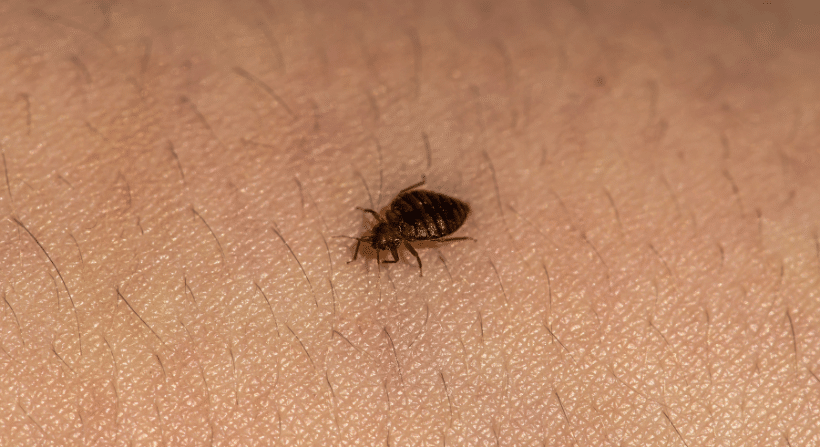
Bed bugs have a flat, oval-shaped body when unfed, which allows them to hide in very small cracks and crevices. After feeding, their bodies become elongated and slightly swollen, appearing more rounded due to the blood meal.
42. How to avoid bringing bed bugs home after travel?
Inspect rooms, isolate luggage, and wash clothing immediately upon return.
43. How to check used furniture for bed bugs?
Inspect seams, buttons, cracks, and hidden joints—especially on mattresses and upholstered furniture.
44. What do bed bugs look like at different life stages?
Nymphs are translucent; adults grow to about apple-seed, size1/4 inch (5-7mm) long and become darker after feeding.
45. Can you see bed bug eggs with the naked eye?
Yes, but when born they are translucent and gain their color after first meal blood,they are very small and often hidden in cracks and crevices.
46. What do bed bugs smell like?
Large infestations may produce a musty or moldy odor.
47. Where do bed bugs hide during the day?
Mattresses, bed frames, headboards, couches, and areas close to where people rest.
48. How long can bed bugs live without feeding?
On average, 3–7 months residential homes depending on conditions.
49. Can bed bugs live in clean homes?
Yes. Cleanliness does not prevent bed bugs—they only need access to a host (people).
50. Do bed bugs spread disease?
No, but bites can cause allergic reactions and secondary skin infections.
51. Are professional bed bug treatments safe for children, pets, and sensitive individuals?
Yes, when performed correctly. Professional companies, including Tulsa Bed Bug Specialist, use EPA-approved products and follow strict label instructions. As long as aftercare directions are followed, treatments are considered safe for children, pets, and sensitive individuals.
52. How discreet is professional bed bug treatment?
Tulsa bed bug treatment is very discreet. Our service use unmarked marked vehicles and quiet equipment, especially in apartments and condos, to protect customer privacy.
53. Can bed bugs survive heat or cold temperatures?
Bed bugs can survive mild heat and cold, but extreme temperatures can kill them. Professional heat treatments raise temperatures high enough to eliminate all life stages, while freezing requires prolonged exposure to very low temperatures.
54. How has international travel increased bed bug infestations?
Increased international travel allows bed bugs to hitchhike in luggage, clothing, and personal items, spreading infestations across cities, states, and countries more easily than ever before.
55. Why did bed bugs almost disappear in the 1950s?
Bed bugs declined sharply due to the widespread use of DDT, a powerful insecticide that is no longer used because of environmental and health concerns.
56. Where did bed bugs originally come from?
Bed bugs are believed to have evolved from bat bugs and have been associated with humans for thousands of years, particularly in Europe and parts of Asia.
57. How did early societies treat bed bug infestations?
Early societies used natural remedies such as heat, smoke, oils, herbs, and physical removal long before modern insecticides existed.
58. Bed bug heat treatments vs. chemical treatments: which is better?
Neither method is universally better. Heat treatments work quickly but require extensive preparation and higher cost. Chemical and hybrid treatments, like those often used by Tulsa Bed Bug Specialist, provide residual protection and may be more effective long term when combined with IPM strategies.
59. How do I know the difference between mosquito bites and bed bug bites?
Mosquito bites usually occur randomly and outdoors, while bed bug bites often appear in clusters or lines and occur overnight on exposed skin.
60. How can you tell the difference between flea bites and bed bug bites?
Flea bites commonly occur on ankles and lower legs and may appear as small red dots. Bed bug bites are more often found on arms, neck, back, or torso and may appear in patterns.
61. Do I have carpet beetles or bed bugs?
Carpet beetles are often mistaken for bed bugs but do not bite. Bed bugs hide near sleeping areas and feed on blood, while carpet beetles feed on fabrics and organic materials.
62. Do carpet beetles bite?
No. Carpet beetles do not bite. Skin irritation associated with carpet beetles is usually caused by allergic reactions to their larvae hairs.
63. What do bed bug bite patterns usually look like?
Bed bug bites often appear in lines, clusters, or zigzag patterns, depending on how the bug feeds.
64. How long does each bed bug life stage last?
Under ideal conditions, bed bugs can develop from egg to adult in about 5–6 weeks, depending on access to a host and temperature.
65. How do bed bugs detect human hosts?
Bed bugs are attracted to carbon dioxide (CO₂), body heat, and human scent, which helps them locate a blood meal.
66. Why do bed bugs spread to new rooms after a disturbance?
When disturbed by cleaning, movement, or treatment attempts, bed bugs may relocate to nearby rooms seeking safety and easier access to hosts.
67. What are landlord obligations for bed bug inspections and treatment?
In many cases, landlords are responsible for providing safe and habitable living conditions, which often includes bed bug inspections and treatment. Specific responsibilities may depend on lease agreements and local regulations.
68. How long does it take for bed bugs to infest a room?
Once introduced, bed bugs can establish themselves within a few weeks and begin spreading to other areas if not addressed quickly.
69. What color are bed bugs before and after feeding?
Before feeding, bed bugs are brown or tan. After feeding, they appear darker and more reddish due to the blood meal.
70. How do you inspect a hotel room or Airbnb for bed bugs?
Check mattress seams, headboards, bed frames, and nearby furniture. Keep luggage elevated and away from beds. Tulsa Bed Bug Specialist also provides educational resources on travel inspections.
71. Do messy or unorganized homes invite bed bugs?
No. Bed bugs are not attracted to dirt or clutter. They are attracted to people. However, clutter can make infestations harder to detect and treat.
72. Do bed bugs fly or jump?
No. Bed bugs cannot fly or jump. They crawl and rely on hitchhiking to spread.
73. Can pets get bed bugs?
Pets do not carry bed bugs like fleas, but bed bugs may bite pets if humans are not available.
74. When should you throw away your furniture?
Furniture usually does not need to be discarded. In severe cases involving structural damage or hygiene concerns, removal may be recommended by a professional.
75. Can bed bugs get into your vehicle?
Yes. Bed bugs can hitchhike into vehicles on clothing, bags, or personal items.
76. Do bed bugs only come out at night?
Bed bugs prefer nighttime feeding but will come out during the day if hungry or disturbed.
77. Can bed bugs cause psychological issues?
Yes. Bed bug infestations can cause anxiety, insomnia, stress, and emotional distress, even after the infestation is resolved.
78. Can bed bugs travel on clothing and shoes?
Yes. Clothing and shoes are among the most common ways bed bugs are transported into homes.
79. Can bed bugs travel from one apartment to an adjoining unit?
Yes. Bed bugs can spread through wall voids, plumbing, electrical outlets, and shared spaces in multi-unit buildings.
80. How fast do bed bugs reproduce in a home?
Female bed bugs can lay 1–3 eggs per day, allowing infestations to grow rapidly if left untreated.
81. Do you offer payment plans?
Yes. Tulsa Bed Bug Specialist offers payment plan options. Terms and conditions apply and can be discussed when scheduling your service.
82. What forms of payment do you accept?
We accept cash, checks, and major credit cards.
83. Do you offer discounts for seniors or military veterans?
We do not currently offer senior or military discounts, but we run seasonal specials and promotions throughout the year.
84. Do you offer guarantees on your work?
Yes. With our full-service treatments, Tulsa Bed Bug Specialist provides a 90-day warranty for added peace of mind.
85. Are there any surprise fees after treatment?
No. All pricing is discussed upfront, and there are no hidden or surprise fees after treatment.
86. Can I pay for the service over the phone?
Yes. Payments can be securely processed over the phone.
87. Do you offer discounts for property managers?
Yes. We offer special pricing and service options for property managers handling multiple units or properties.
88. How do you keep treatment records?
We use professional pest control software to document inspections, treatments, products used, technician details, and service dates.
89. Do you provide receipts and invoices after service?
Yes. Receipts and invoices are provided after each service and can be texted or emailed for your records.
90. Do fish tanks and lizard tanks need to be covered before treatment?
Yes. Aquariums and reptile enclosures must be covered and protected, and in some cases may need to be temporarily removed from treated areas.
91. How long after treatment should bedding be washed and dried?
Bedding and clothing can remain sealed in airtight plastic bags until you are ready to wash and dry them on high heat.
92. What is a common mistake customers make when preparing for treatment?
A common mistake is using drawstring bags instead of tightly sealed, airtight trash bags, which can allow bed bugs to escape.
93. Why not to use bed bug foggers?
Foggers provide no residual protection and do not reach hidden areas like mattress seams, under bed frames, or inside wall voids, often making infestations worse by spreading bed bugs.
94. Are store-bought insecticides effective for bed bugs?
Most store-bought products offer only contact kill with little to no residual effect and are rarely effective for complete control.
95. Do you offer biopesticide treatments for bed bugs?
Yes. Tulsa Bed Bug Specialist offers biopesticide and reduced-risk treatment options.
96. What are common behaviors of bed bugs?
Bed bugs hide in cracks and crevices during the day and come out to seek a blood meal from a host, usually at night.
97. How do bed bugs spread?
Bed bugs spread primarily by hitchhiking on clothing, luggage, furniture, bags, and personal items.
98. Can bed bugs travel from house to house on their own?
No. Bed bugs do not travel outdoors between homes on their own. They must be transported by people, pets, bags, furniture, shoes, or belongings.
99. What if I still see bed bugs after treatment?
Do not panic. It is common to see some bed bug activity after treatment, especially in the first few days. The goal is to see less and less activity over time as the treatment continues to work. With professional services like those provided by Tulsa Bed Bug Specialist, residual products remain active, meaning bed bugs may continue to emerge and be eliminated until no activity is observed.
100. What is the scientific name of bed bugs?
The scientific name of the common bed bug is Cimex lectularius.
101. Do you treat bat bugs?
Yes. Tulsa Bed Bug Specialist is trained to identify and treat bat bugs, which require removal of bats first.
102. Can dermatologists identify bed bug bites?
Yes, dermatologists can identify bites, but bite reactions vary greatly and may resemble other insect bites.
103. Is it common to misidentify bed bug bites?
Yes. Bed bug bites are often mistaken for flea or mosquito bites. Even medical professionals sometimes misdiagnose them due to similar skin reactions.
104. How inconvenient are bed bug treatments?
Our treatment process involves minimal preparation and usually takes only a few hours, unlike some methods that require extensive prep and all-day treatments.
105. How invasive are bed bug treatments?
Because bed bugs hide in beds, nightstands, and nearby furniture, personal items—especially sensitive or personal belongings—should be removed from treatment areas before service begins.
106. Why do some people think bed bugs are invisible?
Newly hatched bed bugs are translucent until they take their first blood meal, making them very difficult to see.
107. Where did the nursery rhyme “Don’t let the bed bugs bite” come from?
The phrase dates back to the early 1900s and reflects a time when bed bugs were a common household pest, often referenced humorously despite their prevalence.
108. Are do-it-yourself bed bug treatments effective?
Usually not. DIY treatments often lack proper products, training, and follow-up, leading to incomplete control and reinfestation also resulting in loss of time and money.
109. Will I speak with a technician when scheduling an appointment?
Yes. You can speak directly with a bed bug technician, not just a scheduler, to answer questions before booking your service.
110. Do you offer other pest control services besides bed bugs?
Yes. In addition to bed bug treatments, we offer general pest control, rodent control, and other specialty services.
111. Can I buy the same products your technicians use?
No. The products used by professionals are restricted to licensed applicators and require manufacturer training and certification.
112. Do you need to perform an inspection before giving a quote?
Not always. To save time, we can often provide pricing without a prior inspection. If needed, the technician can inspect, provide a quote, and perform the treatment during the same visit if approved.
113. Why is bed bug extermination so expensive?
Bed bug extermination is often costly because it is a labor-intensive and highly detailed service. Effective treatment requires experienced technicians, specialized equipment, multiple visits, and professional-grade products. Companies like Tulsa Bed Bug Specialist focus on precision and long-term results rather than quick, ineffective fixes.
114. Why do so many people have bed bugs?
Bed bugs have become more common due to increased travel, global shipping, and shared public spaces. They easily spread through hotels, apartments, schools, gyms, and movie theaters without people realizing it.
115. Will throwing away furniture get rid of bed bugs?
Not always. Throwing away furniture alone rarely solves the problem because bed bugs often spread beyond one item. In Tulsa, discarded furniture near trash areas is often a sign that an infestation still exists inside the home.
116. Why are bed bugs so hard to kill?
Bed bugs are difficult to eliminate because they are excellent at hiding and people do not use professional products. Successful treatment requires knowing where they hide and how to flush them out properly.
117. Where did I get bed bugs?
Most people unknowingly bring bed bugs home from visiting friends or family, hotels, schools, gyms, workplaces, or public transportation. Bed bugs are hitchhikers and spread without warning.
118. Is heat the best way to treat bed bugs?
Heat is one effective option, but it is not always the best or only solution. In some cases, hybrid or chemical-based treatments provide better long-term control with less preparation and risk. Tulsa Bed Bug Specialist recommends treatments based on the situation, not a one-size-fits-all approach.
119. What happens if I wait to get bed bugs exterminated?
Delaying treatment allows the infestation to grow larger and spread, which often results in more complicated treatment and higher costs when professional help is finally needed.
120. I think my roommate is bringing bed bugs into our home. What should I do?
The first step is identifying where the bed bugs may be coming from. Once the source is known, a coordinated treatment and prevention plan can be put in place to stop reinfestation.
121. Do bed bugs like clothes?
Yes. Bed bugs commonly hide in clothing, suitcases, bedding, and pillows, making laundry and proper storage very important during treatment.
122. How common are bed bugs ?
Yes. Studies reported by pest control industry sources show that about one in five people has experienced bed bugs or knows someone who has.
123. Can bed bugs make you sick?
Bed bugs do not typically make people sick, but their bites can cause itching, allergic reactions, rashes, and secondary skin infections from scratching.
124. Do bed bugs live in your hair?
Usually no. Bed bugs prefer to hide near sleeping areas, not on the body. In severe infestations, they may crawl onto hair temporarily but can be removed with normal washing and a fine-tooth comb.
125. Can bed bugs live inside walls?
Yes. Bed bugs can hide in wall voids, electrical outlets, and cracks, especially in apartments or severe infestations.
126. Can bed bugs live on animals?
It is uncommon, but possible. Bed bugs prefer humans, but they may temporarily crawl on pets if no human host is available.
127. How do bed bugs reproduce?
Bed bugs reproduce through a process called traumatic insemination, where the male pierces the female’s abdomen to deposit sperm. This allows populations to grow rapidly if untreated.
128. Do bed bugs get on air mattresses?
Yes. Although air mattresses are harder for bed bugs to climb, they can still reach them over time, especially in heavy infestations.
129.Do metal bed frames prevent bed bugs?
No. While metal bed frames may slow bed bugs down compared to wooden frames, they do not prevent infestations. Bed bugs can still climb metal surfaces, hide in joints, screws, and cracks, and eventually reach you.
130. What do bed bug eggs look like?
Bed bug eggs are small, white, and shaped like tiny grains of rice, often found in clusters hidden in cracks and crevices.
131. Does diatomaceous earth kill bed bugs?
Yes, but it works very slowly on killing pest and is not effective as a stand-alone treatment for active infestations.
132. What is the most effective bed bug treatment?
Professional product-based or hybrid treatments are often the most effective, especially when performed by trained specialists like Tulsa Bed Bug Specialist.
133. Will bed bugs die in a hot car?
Yes. Bed bugs can die in a hot car if temperatures reach 120°F or higher for at least 90 minutes, though this method is unreliable due to Uncirculating an evenly produced Heat.
134. Can you freeze bed bugs?
Yes. Bed bugs can be killed by freezing at 0°F or below for several days, but consistency is critical.
135. What temperature do bed bugs die at?
Bed bugs die at temperatures of 120°F (49°C) or higher when sustained long enough.
136. Are bed bugs poisonous or venomous?
No. Bed bugs are neither poisonous nor venomous, but their bites can cause allergic reactions in some individuals.
137. Does rubbing alcohol kill bed bugs?
Rubbing alcohol can kill bed bugs on contact, but it offers no residual protection and is dangerous due to cause Skin dryness and irritations well as it’s flammable.
138. Does baking soda kill bed bugs?
No. There is no scientific evidence that baking soda is effective against bed bugs.
139. Can bed bugs survive outside?
Not really ,Bed bugs can survive outdoors temporarily, but they prefer indoor environments with access to human hosts.
140. Do mattress encasements kill bed bugs?
Encasements do not kill bed bugs directly, but they trap them, preventing feeding and eventually causing starvation.
141. Can bed bugs eat food?
No. Bed bugs feed only on blood, not food or crumbs.
142. What is the difference between bed bugs and mites?
Bed bugs are insects that feed on blood, while mites are arachnids and may feed on skin flakes, plants, or other materials.
143. Does steam kill bed bugs?
Yes. Steam at 212°F (100°C) can kill bed bugs and their eggs on contact when applied correctly.
144. Do ultrasonic or frequency devices work on bed bugs?
No. There is no scientific evidence that ultrasonic or frequency devices are effective against bed bugs.
145. Can bed bugs be found in medical facilities?
Yes. Although less common, bed bugs can be found in hospitals, clinics, and nursing homes due to high traffic.
146. Do bed bugs have predators?
Yes. Natural predators include spiders, cockroaches, and certain ants, though predators do not control infestations.
147. Do bed bugs prefer certain fabrics?
Bed bugs do not prefer specific fabrics, but they are more likely to hide in folds, seams, and creases on clothes and furniture compared to wood or tile flooring.
148. Do bed bugs make sounds?
No. Bed bugs are silent and do not make audible sounds.
149. Can dryer sheets kill bed bugs?
No. Dryer sheets do not kill or repel bed bugs.
150. Can bed bugs hide in curtains?
Yes. Curtains and other fabric items can serve as hiding places, especially near beds.
151. Do bed bugs need water?
No. Bed bugs get all the moisture they need from blood meals.
152. Does your treatment leave an odor?
No. At Tulsa Bed Bug Specialist, we use professional-grade, odorless products, so there is no lingering smell after treatment.
153. I have sensitive skin. Will your treatment affect my skin?
No. We do not apply products directly to the top of mattresses or seating surfaces where your skin comes into direct contact.
154. I have severe allergies. Will your treatment affect my allergies?
Our treatments use odorless products and are designed to minimize irritation. However, for added safety, we do recommend a short wait time before re-entering treated areas.
Recent Comments